
July 26, 2026
Property Decoration ROI for London Landlords
By

Property decoration ROI for landlords is one of the most over-estimated and under-analysed levers in the London rental market. Landlords tend to either over-invest, specifying a boutique-hotel finish for a £1,800-a-month flat, or under-invest, letting a tired property continue to under-let for years because "the walls are fine". Neither gets the best return. This guide sets out which decoration upgrades consistently lift achievable rent, which ones produce no measurable uplift and should be avoided, how to time the work around the tenancy cycle, and how AIHPG's in-house team delivers the job without the contractor mark-ups that typically erode the return.
Why property decoration ROI matters for rental properties
A property's achievable rent is set by its photographs and the first three minutes of a viewing. The single biggest driver of both is condition, specifically, whether the property looks fresh, neutral, and cared-for, or looks like the last ten tenants left their mark on it. Two otherwise identical London flats in the same postcode can let for rents £150 to £300 per month apart depending on their decorative state alone. Over a 12-month tenancy that is £1,800 to £3,600 of rent, against a typical refresh cost of £2,000 to £5,000, usually paying back inside the first year, and then generating pure upside on every subsequent renewal.
Decoration ROI is also the lever with the shortest cycle. Fabric improvements, new windows, internal wall insulation, boiler replacement, pay back over years. Decoration pays back on the next let. For landlords who measure return, it is where the maths is most forgiving and the evidence is most immediate.
Which decoration upgrades produce the best ROI?
The items below are ranked by practical impact on achievable rent per pound spent, based on patterns we see across thousands of London lets. Every property is different, but the order holds in most cases.
Full repaint in neutral tones
A professional repaint of every wall, ceiling, skirting, architrave, and door in a consistent neutral palette, warm off-white on walls, pure white on ceilings and woodwork, is the highest-ROI decoration job there is. It visually expands the space, removes years of scuff marks and colour mismatches, and gives the photographs a bright, clean feel. Typical cost for a two-bedroom London flat: £1,400–£2,200 if done by a professional team; less if done by a single decorator over a longer window. Typical rent uplift: £75–£150 per month.
Kitchen refresh
A full kitchen replacement rarely pays back within a rental horizon. A kitchen refresh almost always does. A refresh means repainting or replacing cabinet doors, upgrading handles and taps, regrouting tiles, replacing the worktop (or resurfacing it), and fitting a new splashback. Cost for a typical London kitchen: £900–£2,000. Rent uplift: £40–£100 per month, and, importantly, a much faster let, because kitchens and bathrooms are the two rooms prospective tenants judge most harshly.
Bathroom refresh
Same logic as the kitchen. A full bathroom replacement is a last-resort investment; a refresh, re-grouting, replacing taps, shower head, toilet seat, bath panel, mirror, and fitting new shower screen seals, is a different level of economic return. Cost: £400–£900. Rent uplift: £30–£80 per month. If the existing white suite is genuinely beyond saving, a budget replacement suite runs £1,500–£2,800 fitted and still pays back comfortably.
Flooring
Worn or stained carpet is the fastest rent-killer in London stock. Replacing it with mid-range laminate or LVT (luxury vinyl tile) in a light oak finish, £25–£45 per square metre supplied and fitted, both photographs better and wears far longer than carpet. Leave carpet only in bedrooms, and only where the existing carpet is in good condition. Cost for a two-bedroom flat: £1,200–£2,200. Rent uplift: £60–£120 per month, plus a meaningful reduction in cleaning cost at check-out.
Lighting
Replacing old halogen spots and yellowed pendants with modern LED fittings is a small spend with outsized visual impact. A warm-white 3000K LED palette makes every other surface in the property look better. Cost: £200–£500 for a full flat if fittings are switched like-for-like. Rent uplift: not always isolable, but properties with cohesive modern lighting let materially faster. The flat looks finished rather than patched-together.
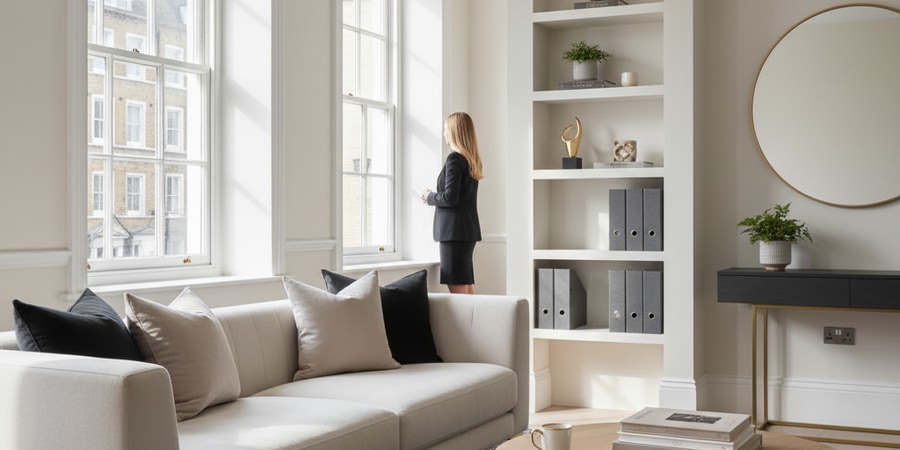
Curtains, blinds, and soft furnishings
For furnished or part-furnished lets, coordinated curtains or blinds across every room is a small spend that lifts the photographs visibly. Avoid heavy patterned fabrics that date quickly; plain off-white, stone, or charcoal linen is a safer long-horizon choice. Cost: £300–£700 for a typical flat. Rent uplift: modest (£20–£40 per month), but a fast payback nonetheless.
Decoration upgrades to avoid
Some decoration spends are consistently below the ROI threshold in the London rental market, and should be left to the owner-occupier stage of the property's life. These include: statement wallpaper and feature walls (taste-specific, ages poorly), bespoke built-in joinery (expensive, rarely commands a premium), high-end appliance brands (tenants notice the kitchen looks good, not who made the hob), premium worktops (a resurfaced or mid-range laminate worktop performs almost identically on photographs), and anything that commits a specific colour palette for longer than five years. As a rule, the more personal a decoration choice, the weaker its rental ROI.
There are also two categories of spend that look like decoration but are really liabilities: bespoke built-in wardrobes that restrict how a tenant can use a bedroom, and heavily-styled furniture packages for "unfurnished with character" listings: both age fast, both date the photographs within a year, and both narrow the pool of prospective tenants. Keep furnishing decisions reversible, and keep finishes simple enough to look fresh for two to three tenancies in a row.
When to decorate, timing the work around the tenancy cycle
The optimal window for decoration is the gap between tenancies. This sounds obvious but most landlords time it wrong, treating the check-out clean as the final step and listing immediately. A five-to-ten-day decoration window between check-out and re-marketing generates better photographs, a higher asking rent, and usually a faster let, which more than offsets the slightly longer void. If the current tenancy has given notice, begin planning decoration two weeks before check-out so trades are booked and materials are on site the day the property becomes empty. Our void-periods guide covers this end-to-end sequencing in more detail.
For rolling tenancies under the Renters' Rights Act 2025 (where fixed terms no longer apply), a sensible alternative pattern is a lighter in-tenancy refresh: an agreed weekend of repainting, re-grouting, and light fixings carried out by arrangement with the tenant, in exchange for a modest rent consideration. This keeps the property's photographs and compliance footprint current without waiting for a check-out.
Budget refresh vs full renovation
A budget refresh, paint, flooring, bathroom and kitchen cosmetic improvements, lighting, typically costs £3,000–£6,000 for a two-bedroom London flat and pays back in under a year. A full renovation, new kitchen, new bathroom, rewiring, re-plumbing, replaced floor coverings throughout, typically costs £25,000–£60,000 and pays back over three to seven years depending on the rent uplift and the achievable sale uplift at exit. For most landlords, the right answer is to do the budget refresh between every tenancy and the full renovation once every 10–15 years or at acquisition of a tired property. Combining a full renovation with improvements targeted at EPC rating (insulation, heating, lighting) materially changes the maths, the same visit solves both the decoration and the MEES position at once.
How AIHPG handles property decoration for landlords
Our decoration and renovation service is delivered by in-house teams, painters, tilers, flooring fitters, electricians, plumbers, rather than by subcontractors. That matters in three practical ways for a landlord measuring ROI. First, there is no contractor mark-up: the price on our quote is the price paid to the tradesperson, with a single transparent coordination fee rather than 20% stacked on every line item. Second, scheduling is direct rather than mediated, which means a 10-day window between tenancies is a 10-day window, not a 10-day window that slips to 22 because the third-party decorator took another job. Third, the same team delivers the work across every property in a landlord's portfolio, so the finish is consistent and the maintenance trail is traceable.
For landlords on a full management instruction, decoration is planned as part of the tenancy cycle and budgeted against the expected rent uplift at the next renewal or re-let. For landlords on a let only service, decoration is quoted as a one-off project ahead of marketing, with costs agreed in writing before work begins.
Related Posts.
Contact Us
Stay in touch.
Have a query or interested in our services? Contact us