
July 26, 2026
The Gas Safety Grace Period: What Landlords Get Wrong
By
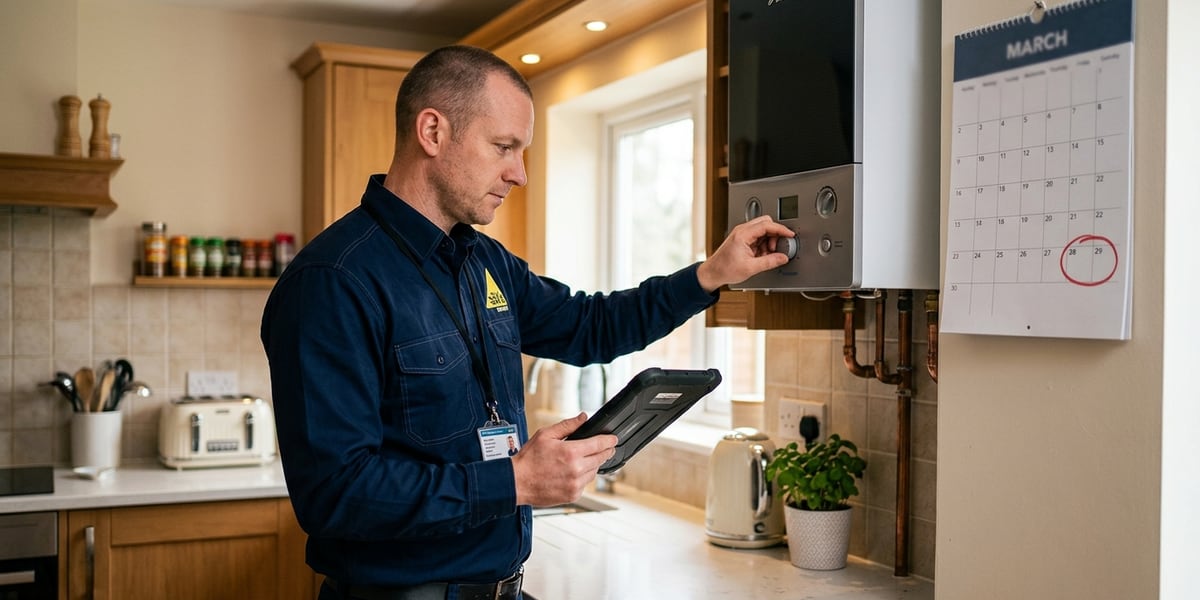
The gas safety grace period is one of the most misunderstood rules in lettings, and the misunderstanding quietly puts landlords in breach every year. In plain terms: you can have your annual gas safety check carried out up to two months before the current certificate runs out, and the renewal still keeps the same expiry date. It is not a 28-day rule, and it is emphatically not a period of grace after expiry. This guide explains exactly how the gas safety grace period works, the two myths that trip landlords up, the separate notification deadline that gets confused with it, and what actually happens if you miss the date.
In Short
The gas safety grace period at a glance
- The grace period is a two-month window before expiry: not 28 days, and never after.
- A check done in that window keeps the original anniversary date (Regulation 36A).
- Let the certificate lapse and you are non-compliant from the very next day. There is no after-expiry grace.
- The separate "28 days" rule is the deadline to give your tenant a copy of the record (Regulation 36(6)).
- Gas safety is enforced by the HSE; penalties run to unlimited fines and imprisonment.
What is the gas safety grace period?
Every let property with a gas supply needs an annual gas safety check. A Gas Safe registered engineer inspects each gas appliance, flue and pipe and issues a Gas Safety Record, still widely called a CP12, valid for twelve months. The gas safety grace period is the flexibility built into that annual cycle: a window in which you can have the check done early without your renewal date drifting forward. It was introduced by the Gas Safety (Installation and Use) (Amendment) Regulations 2018 for a practical reason: without it, every check would have to fall on the exact anniversary, leaving no room for engineer availability or tenant access. The part landlords routinely get wrong is how long that window is, and which direction it runs.
How the gas safety grace period works: the two-month window
The grace period is governed by Regulation 36A of the Gas Safety (Installation and Use) Regulations 1998. Where a check is completed within the two months ending with the deadline date, it is treated as having been carried out on the deadline date itself. In plain terms: you can bring the engineer in up to two months early, and your next certificate still runs from the original anniversary rather than from the day of the early check.
A worked example makes it concrete. Say your certificate expires on 1 October. Under Regulation 36A you can have the new check done any time from 1 August onwards, and the renewed certificate will still be dated to expire on 1 October the following year, the anniversary holds. Do the check on 15 September and you have not "lost" two weeks; the clock still resets to 1 October. This is what stops the renewal date creeping earlier each year, as it would if every check simply started a fresh twelve months from the day it was done.
One condition is worth noting: this date-preserving treatment is built around certificates kept up to date. Renew more than two months early and the rule does not apply, your anniversary moves forward to the date of that check. For what a check actually covers and who must carry it out, see our gas safety certificate guide.
Before expiry, not after: the first misconception
Here is the error that costs landlords most often. Many believe the grace period is a buffer after the certificate expires, a few weeks in which a lapsed certificate is somehow still acceptable while they get the check booked. It is not. The two-month window runs before the deadline, never after it. The day after the expiry date, the property is non-compliant. There is no grace, no tolerance and no informal allowance. A gas safety certificate is binary: it is either in force or it is not.
That matters because the consequences attach immediately. From the moment a certificate lapses you are in breach of your statutory duties, regardless of whether anything is actually wrong with the appliances. Treating the grace period as an after-expiry cushion is the most reliable way to drift into non-compliance, and it is entirely avoidable, because the window exists precisely so you can act early.
"28 days" is a different rule entirely: the second misconception
The second myth is a mix-up of numbers. Ask landlords how long the grace period is and many will say "28 days." That figure is real, but it belongs to a separate duty. Under Regulation 36(6), once a check is done you must give a copy of the record to existing tenants within 28 days, and to any new tenant before they move in, and keep the record for at least two years. That is a notification and record-keeping rule; it has nothing to do with when the check itself must be carried out.
So the two numbers do different jobs. The two-month window under Regulation 36A is about when you can do the check early and keep your date. The 28-day deadline under Regulation 36(6) is about getting the paperwork to your tenant afterwards. Conflating them is how landlords talk themselves into "28 days' grace" on the inspection, a belief with no basis in the regulations.
What happens if you miss the gas safety deadline
Gas safety is enforced by the Health and Safety Executive (HSE), not your local council, and the duties sit under the Health and Safety at Work etc. Act 1974 and the Gas Safety (Installation and Use) Regulations 1998. A lapse is therefore not a civil ticket. It is a criminal matter, and the offence is committed the moment the date passes with the property still let.
The penalties are deliberately severe. Since changes that took effect in 2015, the courts can impose an unlimited fine, and the offence carries imprisonment of up to six months in the magistrates' court or up to two years on conviction in the Crown Court. In the gravest cases, where a tenant dies from carbon monoxide poisoning or a gas explosion in an uncertificated property, landlords have faced gross negligence manslaughter charges, with custodial sentences typically reported in the region of two to seven years. Sentencing practice evolves with case law, so treat these as the position as at the date of publication rather than a fixed tariff. There is also a commercial sting landlords overlook: many landlord insurance policies are void while a property is uncertificated. The takeaway is blunt, never let the date pass when a two-month head start is yours for the asking.
Gas safety, Section 21 and the Renters' Rights Act 2025
Until recently, gas safety carried a second, procedural consequence: a landlord who had failed to give the tenant a gas safety certificate before they first moved in could find a Section 21 no-fault possession notice permanently invalid, with no way to cure the original failure. A paperwork slip became a possession trap.
That has now changed. Under the Renters' Rights Act 2025, Section 21 was abolished, with the first phase of implementation from 1 May 2026, so possession now runs through the Section 8 grounds. The old "missing certificate blocks your Section 21" rule no longer bites, simply because Section 21 is gone. But do not mistake that for gas safety mattering less: the duty is unchanged and still criminal, compliance records feed the new private rented sector database, and any landlord seeking possession is in a far stronger position with a clean compliance history. For the wider penalty landscape under the new regime, see our guide to Renters' Rights Act fines.
Gas safety vs EICR vs EPC: three different clocks
The gas safety certificate is one of three core compliance documents, and each runs on its own renewal cycle, which is exactly why landlords lose track of them:
- Gas safety record, every 12 months, with the two-month early-renewal window described above.
- EICR, up to 5 years, but with no grace period at all: it is in force or it is not. We cover the timing in how long an EICR lasts.
- EPC, valid 10 years, with minimum-rating rules tightening over the decade, see our EPC ratings guide.
Three certificates, three intervals, one shared consequence if any lapses. The landlords who never get caught out track all three dates together rather than reacting to each in isolation, the principle behind our landlord compliance calendar.
How AIHPG approaches this
At AIHPG, a gas safety renewal is never something we expect a landlord to remember. It is one of the safety items included as standard in our service bundles, and we diarise every property's renewal so the booking is made before the two-month window even opens, early enough to absorb engineer availability and tenant access without ever risking the date. The check is carried out by Gas Safe registered engineers through our in-house operation, so there is no third party to chase, and the record is issued to the tenant well inside the 28-day deadline and filed against the property.
If an inspection turns up a defect, our property management team scopes and schedules the remedial work straight away, so the risk is managed rather than left on your desk. For landlords on our let-only with services plan, the certificate is in place before the tenancy begins; for fully managed landlords, it is maintained for the life of the instruction, one less date you ever have to think about.
Frequently asked questions about the gas safety grace period
What is the gas safety grace period?
It is a two-month window before your gas safety certificate expires in which you can have the annual check carried out without losing your renewal date. A check done inside that window is treated as if it happened on the original expiry date, so the anniversary stays fixed year to year.
Can I renew a gas safety certificate before it expires?
Yes. Under Regulation 36A you can have the check done up to two months before the current certificate expires and keep the same expiry date for the next year. Renew earlier than two months and the anniversary simply moves forward to the date of the new check.
Does the gas safety grace period apply after the certificate expires?
No. There is no grace period after expiry. The certificate is invalid from the day after its expiry date, and the property is non-compliant from that moment. The two-month window exists only before expiry, never after it. This is the misconception that catches landlords out.
Is the gas safety grace period 28 days or two months?
Two months. The 28-day figure is a separate rule, the deadline for giving your tenant a copy of the gas safety record after the check. The renewal grace period under Regulation 36A is a two-month window before the certificate expires.
What happens if my gas safety certificate expires?
You are immediately in breach of the Gas Safety (Installation and Use) Regulations 1998. The Health and Safety Executive can prosecute, with penalties including an unlimited fine and imprisonment. Your landlord insurance may also be void while the property is uncertificated, so always book the check before the date lapses.
Who enforces gas safety for landlords?
The Health and Safety Executive (HSE), not the local council. Gas safety duties sit under the Health and Safety at Work etc. Act 1974, so a breach is a criminal matter. This is separate from the civil penalties councils issue for other housing and licensing breaches.
Does a missing gas safety certificate still affect possession after Section 21?
Section 21 was abolished under the Renters' Rights Act 2025, so the old rule that a missing certificate could block a Section 21 notice no longer bites. But gas safety remains a criminal duty, and compliance still matters for possession under Section 8 and for the private rented sector database.
This guide is general information for landlords, not legal advice. Gas safety duties, penalties and sentencing are set by statute and develop through case law, and can change, check the current HSE and gov.uk guidance, and for your specific situation seek professional advice. Figures reflect the position as at the date of publication.
Related Posts.
Contact Us
Stay in touch.
Have a query or interested in our services? Contact us