
July 26, 2026
Deposit Disputes Under the PRS Ombudsman
By

For years, the tenancy deposit system was a two-party conversation. The landlord proposed deductions; the tenant agreed or disputed; if there was a dispute, the deposit scheme adjudicated. It was slow, sometimes frustrating, but broadly fair, and the deposit amount was the only thing at stake.
Since the PRS Ombudsman came into force under the Renters' Rights Act 2025, a third party has entered the conversation. The Ombudsman sits above the deposit schemes: not replacing them, but operating alongside them, with wider powers to look at how the landlord handled the process and to award compensation beyond the deposit itself. For landlords, this is the change that has most altered the landscape of end-of-tenancy disputes.
How the new two-track system works
When a tenant disagrees with deposit deductions at the end of a tenancy, they now have two routes.
Route 1, Deposit scheme dispute resolution. This is the traditional route, handled by TDS, DPS or mydeposits depending on which scheme the deposit was protected in. The scheme's adjudicator reviews the landlord's proposed deductions, the tenant's objections, the check-in and check-out inventories, and any supporting evidence. They make a decision on how the deposit is apportioned. Timeline: 4-8 weeks. Outcome: the deposit is distributed according to the decision.
Route 2, PRS Ombudsman complaint. New under the 2026 Act. The tenant can complain to the Ombudsman about the landlord's handling of the deposit: not just about the deductions themselves, but about the wider process: response time, clarity of itemisation, evidence produced, tone of communication. Timeline: 8-12 weeks. Outcome: binding decision that can include compensation up to £25,000 on top of the deposit apportionment.
A tenant can use either route, or, and this is the development landlords need to pay attention to, both in parallel. The Ombudsman has established that running a concurrent complaint does not bar the deposit scheme process, and vice versa. The two decisions can arrive at different outcomes if the landlord's evidence is strong on the deductions but weak on the process.

What tenants are actually complaining about
From the first six months of Ombudsman complaint data, deposit-related complaints fall into a few distinct categories:
Unclear itemisation of deductions
The single most common category. The landlord sent a deposit statement saying "£380 for cleaning, £240 for damage" with no further detail. The tenant challenged; the landlord struggled to produce itemised contractor invoices or photographic evidence at the right resolution. Ombudsman decisions in these cases routinely reduce the deductions by 50-80% and sometimes add compensation for the unreasonable handling. Cleaning is the single most disputed line of all, which is why a methodical end of tenancy cleaning checklist, measured against the check-in inventory, heads off so many of these claims before they start.
Unreasonable charges for fair wear and tear
The second most common. The landlord charged the tenant for carpet wear, paintwork marks, and appliance ageing that would be expected from normal use over a multi-year tenancy. The Ombudsman applies the common-law "fair wear and tear" principle, the tenant is not liable for the property's natural depreciation during the tenancy, only for damage beyond what would be expected from reasonable occupation.
Late return of the undisputed portion
The landlord disagreed with the tenant over a £200 cleaning charge. Rather than releasing the remaining £1,800 of deposit that nobody disputed, the landlord held the entire deposit pending resolution. The Ombudsman has been consistent on this: the undisputed portion should be released within the statutory 10-day window, and withholding it generates a separate compensation claim.
No check-out inventory to compare
A minority of cases, but always catastrophic for the landlord. The landlord has a check-in inventory but no check-out, or vice versa. Without matched before-and-after evidence, the Ombudsman cannot determine what damage occurred during the tenancy. Deductions are typically refunded in full, and compensation is awarded for the landlord's failure to document the tenancy end properly.
Aggressive or dismissive tone in communication
Even when the underlying deductions are fair, the landlord's handling of the exchange can sink the case. Ombudsman decisions have specifically cited "unreasonable tone", "dismissive responses to reasonable questions", and "confrontational rather than resolution-focused communication" as grounds for compensation. The conduct of the landlord is scrutinised, not just the substance.
What the Ombudsman actually looks at
The Ombudsman's assessment framework, from the decisions published so far, examines four things in order:
1. Was the deposit correctly protected in the first place?
If the deposit was not registered in an approved scheme within 30 days of receipt, or if prescribed information was not served on the tenant, the landlord loses before the deductions are even examined. This is the absolute-baseline compliance check, and a small but meaningful number of landlords are still failing it.
2. Is there a matched check-in and check-out inventory?
Both must exist. Both must be photographic and dated. Both must be signed or acknowledged by the tenant. If either is missing, the Ombudsman assumes against the landlord.
3. Is each deduction specifically evidenced?
For every item on the deposit statement, the landlord needs to produce: a photograph showing the damage at check-out that was not present at check-in; a contractor invoice for the remediation at reasonable market rates; and a reasonable basis for the tenant being liable (i.e., not fair wear and tear).
4. Was the process handled reasonably?
Response times to tenant queries, clarity of the deposit statement, willingness to discuss and explain, and the overall tone of the exchange. This is where deposit-scheme and Ombudsman assessments diverge most, the deposit scheme only looks at the deductions themselves, while the Ombudsman also weights the process.
How landlords win these cases
The landlords whose deductions are consistently upheld, both in deposit scheme adjudications and in Ombudsman complaints, share a set of practices.
AIIC-accredited inventories
Association of Independent Inventory Clerks accredited reports are the gold standard. They meet the evidential bar the Ombudsman applies, and the pre-commencement case law under the deposit schemes has established them as highly reliable. A DIY inventory with iPhone photos can work, but it has to be as thorough as an AIIC version, which most landlord-produced inventories are not.
Itemised deposit statements
Every deduction on its own line, with a specific description of the damage, a reference to the check-in and check-out photographs that evidence it, and a contractor invoice or quotation for the remediation. "£380 for cleaning" becomes "£380 for deep clean including oven interior, grease build-up on kitchen cabinets, and limescale on bathroom tiles (see check-out photos 12, 18, 22), invoice attached from East London Cleaning Services."
Response-time discipline
Tenant queries answered within 48 hours. Questions about specific deductions answered with specific evidence, not generic refusals to engage. Willingness to reduce or waive a deduction when the tenant makes a reasonable point rather than dig in defensively.
Undisputed funds released promptly
If the tenant disputes £200 of a £2,000 deposit, the £1,800 is released within the statutory 10-day window. The £200 goes through dispute resolution. Holding the full £2,000 pending dispute resolution generates an additional complaint all on its own.
Professional handling throughout
Emails are written clearly, courteously, and without accusation. The tenant is addressed as a reasonable party even if the landlord disagrees with them. The tone is problem-solving rather than confrontational. This sounds obvious but the Ombudsman case data shows it is the single most underrated factor in getting decisions upheld.
Fair wear and tear, the 2026 reframing
The doctrine of fair wear and tear is the most common source of deposit disputes, and the Ombudsman has brought some welcome specificity to how it should be assessed.
The key principle: fair wear and tear is what would be expected given the length of the tenancy, the number of occupants, and the property's original condition. A two-year tenancy by two professional adults with no pets will produce wear and tear that is qualitatively different from a four-year tenancy by a family with children and a dog.
The Ombudsman's published guidance gives specific examples:
- Carpets, general flattening in high-traffic zones is fair wear. Specific stains from spills, burns, or pet damage are not.
- Paintwork, minor marks and scuffs in high-traffic zones are fair wear. Crayon, hair dye, or wall-hanging holes beyond a reasonable number are not.
- Kitchen cabinets, handle wear and minor surface marks are fair wear. Water damage from a long-term unreported leak is not (though the landlord will also be asked why the leak was not addressed).
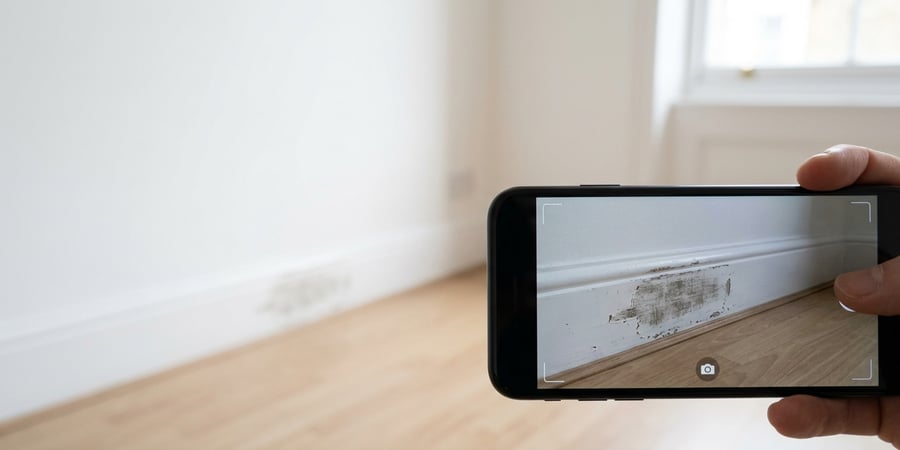
- Bathroom sealant, discoloration over a multi-year tenancy is fair wear. Mould from an unventilated bathroom is not fair wear but may equally be a landlord responsibility if mechanical ventilation was inadequate.
- Appliances, normal degradation of white goods during the tenancy is fair wear. Tenant-caused damage (melted element from putting metal in the microwave, broken glass from misuse) is not.
The underlying test the Ombudsman applies: would a reasonable landlord expect this condition at the end of this length of tenancy by this profile of tenant, given the property's starting condition? If yes, fair wear. If no, potentially chargeable.
What to do about this now
Five specific changes every landlord should make, in light of the new two-track system:
- Upgrade your inventory standard to AIIC-accredited. If you've been doing DIY inventories, the Ombudsman-era bar is higher than what you have been producing. A proper AIIC check-in and check-out pays for itself the first time any deposit dispute goes wrong.
- Adopt a written itemisation template for deposit statements. Every deduction on its own line, with its specific evidence. No round numbers without explanation.
- Set a 48-hour response-time discipline on tenant deposit queries. Longer response times are increasingly being cited as "unreasonable handling" in Ombudsman decisions.
- Release undisputed portions within the statutory window. Never hold the full deposit over a partial dispute.
- Keep contractor invoices for every deduction. Not just quotes, actual paid invoices. The Ombudsman has been known to reject quoted amounts as speculative if the work has not actually been done.
The cultural shift this represents
The Ombudsman's arrival has changed how the landlord-tenant relationship is assessed at its most friction-prone point. Where the old system was transactional, "you owe this, or you don't", the new system is relational. It looks at how the landlord handled the tenant throughout, not just at the deposit statement. A landlord who has been professional, responsive, and fair throughout a tenancy will find end-of-tenancy disputes rarely escalate. A landlord who has been distant, slow, or dismissive will find even legitimate deductions hard to defend.
This is consistent with the broader direction of the Renters' Rights Act 2025. The Act has not abolished the landlord's rights; it has raised the operating standard the landlord needs to maintain to exercise them. The deposit regime is one of the clearest places this is playing out in practice.
Get the inventory, get the itemisation, get the response time, and get the tone right, and deposit disputes remain what they used to be: occasional and manageable. Get any of those wrong, and the Ombudsman has given tenants a route that is materially less forgiving than the old system was.
Frequently asked questions about deposit disputes and the PRS Ombudsman
Does the PRS Ombudsman replace the deposit schemes?
No. Tenancy Deposit Scheme (TDS), Deposit Protection Service (DPS) and mydeposits still operate as before. The PRS Ombudsman is an additional route for tenants. They can choose to raise a deposit-related complaint with the Ombudsman instead of, or in parallel with, the deposit scheme's dispute resolution. In practice, tenants are increasingly using the Ombudsman route because it is faster and binding decisions can include compensation above and beyond the deposit amount.
What makes an Ombudsman deposit decision different from a deposit scheme decision?
Two things. First, the Ombudsman can award compensation beyond the deposit amount, up to £25,000, where the landlord's handling was materially unreasonable. Deposit schemes can only determine how the deposit itself is apportioned. Second, the Ombudsman considers the wider conduct of the landlord, not just the deductions themselves. A landlord who was slow to respond, confusing in communication, or unreasonable in tone can lose an Ombudsman decision on conduct grounds even if the individual deductions were justifiable.
What evidence do I need to win a deposit deduction claim?
Three things, consistently. A detailed photographic check-in inventory signed by the tenant at move-in. A detailed check-out inventory with matching photographs taken at the same angles as the check-in. Contractor invoices for any remediation work charged against the deposit, itemised by specific damage. Without all three, you will struggle to justify any deduction. With all three, most deductions that are genuinely fair will be upheld.
How long do I have to return the deposit?
The statutory timeline is 10 days from when both parties agree the deductions (or no deductions). If there is a dispute, funds must remain protected in the scheme until the dispute is resolved. You cannot release any portion you agree is returnable until the full dispute is settled. Late return of an agreed deposit can itself generate an Ombudsman complaint.
Related Posts.
Contact Us
Stay in touch.
Have a query or interested in our services? Contact us