
July 26, 2026
The End of Tenancy Cleaning Checklist: Room by Room
By
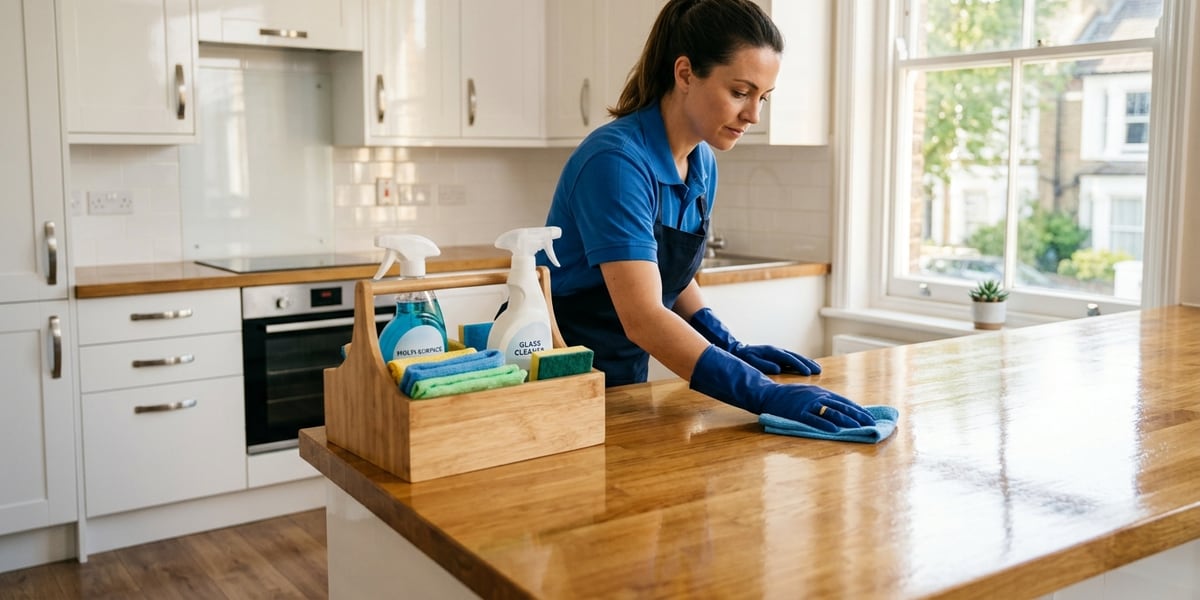
An end of tenancy cleaning checklist is the single most useful thing a tenant can have when moving out, and the single most useful thing a landlord can hand over when a tenancy ends. Get the clean right and the deposit comes back in full; get it wrong and cleaning becomes, by a clear margin, the most common reason money is held back. This guide is a comprehensive, room-by-room end of tenancy cleaning checklist you can work straight through, whether you're a tenant cleaning to recover your deposit or a landlord setting the standard you expect. It covers what an end-of-tenancy clean actually means, why it decides so many deposits, the room-by-room detail itself, and where a professional clean earns its fee.
In Short
The end of tenancy cleaning checklist at a glance
- An end-of-tenancy clean returns the property to its check-in (inventory) standard, fair wear and tear aside.
- Cleaning is the single most common cause of deposit disputes, the Tenancy Deposit Scheme puts it in over half of cases.
- The standard isn't set by law; it's deposit-scheme convention, judged against your check-in inventory and photos.
- Work room by room: kitchen and bathrooms carry the most weight, and the oven most of all.
- Photograph everything at the end, evidence settles disputes faster than argument.
What an end-of-tenancy clean actually means
An end-of-tenancy clean is not the same as a regular weekly tidy, and it isn't a demand for the property to be cleaner than the day you moved in. The standard is specific: return the property to the condition recorded at check-in, allowing for fair wear and tear. That benchmark is the check-in inventory and the photographs taken at the start of the tenancy, not an abstract idea of "spotless."
It's also worth being clear on what the law does and doesn't require. There is no statutory rule that you must pay a professional cleaning company. Since the Tenant Fees Act 2019, a blanket tenancy clause obliging a tenant to pay for a professional clean is unenforceable, what matters is the condition at hand-back, not the receipt. A thorough clean that meets the check-in standard is acceptable however it's done. The "professional clean equals inventory standard" idea is an industry convention enforced through the deposit schemes, not a legal mandate.
Why cleaning decides so many deposits
In England and Wales, every deposit must be held in one of three government-authorised schemes, the Tenancy Deposit Scheme (TDS), the Deposit Protection Service (DPS) and mydeposits, within 30 days of receipt. When a tenancy ends and a landlord proposes a deduction the tenant disputes, the scheme's free adjudication service decides it on the evidence.
And the evidence overwhelmingly turns on cleaning. The Tenancy Deposit Scheme consistently reports cleaning as the single most common cause of disputes: featuring in over half of the cases it handles, ahead of damage and redecoration. The reason it's so common is also the reason it's so avoidable: the standard is fixed in advance by the check-in inventory, so a methodical clean measured against that record removes the argument before it starts. For how those disputes actually play out, see our guide to deposit disputes under the PRS Ombudsman.
The room-by-room end of tenancy cleaning checklist
This is the heart of it, the end of tenancy cleaning checklist itself. Work one room at a time, top to bottom, leaving floors until last. Tick each item off as you go, and photograph the flashpoints (oven interior, bathroom tiles, carpets) once they're done.
Kitchen
The kitchen and the oven in particular are where most cleaning deductions originate. Give it the most time.
- Oven: interior, racks, trays and door glass fully degreased (the single biggest flashpoint)
- Hob, extractor hood and filter, and the splashback behind
- Microwave cleaned inside and out
- Fridge and freezer emptied, defrosted, and wiped inside and out, leave off with the door ajar if vacating
- Washing machine and dishwasher: filters, drawers and door seals
- All cupboards and drawers emptied and wiped inside and out
- Worktops, tiles, sink and taps cleaned and descaled
- Bins emptied, washed and deodorised
- Floor washed, including under freestanding appliances where you can reach
Bathrooms
- Limescale removed from taps, showerhead, screen and tiles
- Grout and sealant cleaned, with any mould treated
- Toilet cleaned: bowl, seat, base and behind
- Bath, basin and shower tray scrubbed
- Shower screen glass polished clear
- Mirror and any glass shelves wiped streak-free
- Extractor fan vent dusted
- Cabinets emptied and wiped inside and out
- Floor washed, including edges and behind the toilet
Bedrooms
- Wardrobes and drawers emptied and wiped inside and out
- Skirting boards, picture rails and door frames dusted
- Windows cleaned inside, with sills and tracks wiped
- Behind and under beds and furniture vacuumed
- Carpets vacuumed, with any marks spot-treated
- Mirrors and light fittings or shades dusted
- Fingermarks wiped from walls, switches and handles
Living areas
- Carpets vacuumed, including under and behind sofas
- Upholstery vacuumed, cushions lifted and cleaned beneath
- Hard floors swept and mopped
- Skirting, shelves and all surfaces dusted
- Light fittings, lampshades and switches cleaned
- Curtains and blinds dusted or laundered per the care label
- Windows cleaned inside, with sills and frames wiped
- Media points and the area behind furniture dusted
Hallways and stairs
- Banisters, handrails and spindles wiped down
- Skirting and stair edges cleaned
- Light switches, sockets and door handles wiped
- Doors and frames, including any glass, cleaned
- Carpet vacuumed or hard floor mopped, stair edges included
- Under-stairs cupboard cleared and wiped
Throughout the whole property
- Cobwebs removed from ceilings and corners
- Light fixtures and shades dusted, with all bulbs working
- Interior windows, sills, frames and tracks cleaned
- All switches, sockets and door handles wiped
- Radiators dusted, including behind
- Air vents and extractor grilles cleaned
- All rubbish and personal belongings removed
- Keys, fobs and manuals left as listed on the inventory
Furnished property, the extra items
A furnished let is checked against a longer inventory, so the clean has more to cover. On top of everything above:
- Sofas and armchairs vacuumed and stain-treated, cushions cleaned beneath
- Mattresses turned, vacuumed, and protectors laundered
- Dining table and chairs cleaned, including joints and legs
- Crockery, cutlery, glassware, pots and pans washed and put away
- Soft furnishings, curtains, throws and rugs, cleaned per their care labels
- Small appliances seen to (kettle descaled, toaster crumb tray emptied)
- Lampshades, ornaments and mirrors dusted
- Every inventory item checked off individually, furnished check-outs compare item by item
Photograph everything, the evidence that wins
A clean you can't evidence is worth less than a clean you can. Once each room is done, photograph it, and photograph the flashpoints close up, with the date recorded. These images are your side of the comparison the deposit scheme will make against the check-in inventory and check-out report. Where a landlord's AIIC-accredited inventory meets the evidential bar the schemes apply, a tenant's dated photos are the natural counterpart. When both sides hold clear, comparable evidence, most cleaning disputes never escalate, the same principle that decides deposit disputes generally.
DIY versus a professional end-of-tenancy clean
Both routes can recover a deposit in full, the deposit scheme judges the result, not the method, so the choice comes down to the property and your time, the end of tenancy cleaning checklist itself doesn't change.
A DIY clean is cheaper and perfectly viable for a smaller, well-kept flat. The catch is time and the oven: budget most of a day for a one-bedroom, more for a family home, and don't underestimate oven degreasing or bathroom limescale. A professional clean costs more, but the itemised invoice is itself a piece of evidence, and reputable firms will re-attend if the check-out flags a miss. It tends to pay for itself on larger or heavily lived-in properties, and wherever the deposit at stake comfortably exceeds the price of the clean. Neither route guarantees an outcome, the test is always the condition against check-in, but a methodical clean, evidenced with photos, is what consistently protects the deposit.
How AIHPG approaches this
For the landlords we manage, the end-of-tenancy clean is not something to arrange and chase. It's included as standard in our management packages and delivered by our in-house cleaning operation, so there's no third party to coordinate. Landlords pay transparent fixed pricing, and because the clean and the inventory are handled by the same team, the work is photographed and filed against the very check-in record it will later be compared to, evidence built in from the start.
The timing matters as much as the standard. We schedule the clean the moment notice is served, so a property is turned around and ready to re-let with the minimum of empty days, the same back-to-back discipline that keeps void periods short. For fully managed landlords it runs for the life of the instruction; the principle behind it is our wider management approach: operational work handled and documented, not left on your desk.
See also: our companion guide to end of tenancy cleaning law in the UK, exactly what a landlord can and can't lawfully charge a tenant for at check-out.
Frequently asked questions about the end of tenancy cleaning checklist
What does an end of tenancy clean include?
A full return to the property's check-in condition: oven and kitchen appliances, bathrooms descaled and de-moulded, all cupboards emptied and wiped, carpets vacuumed, windows cleaned inside, skirting and switches dusted, and all rubbish removed. The benchmark is the inventory taken when you moved in, fair wear and tear aside.
Do I have to pay for a professional end of tenancy clean?
Not automatically. Since the Tenant Fees Act 2019, a blanket tenancy clause forcing you to pay for a professional clean is unenforceable. What you must do is return the property as clean as it was at check-in. A thorough DIY clean that meets that standard is perfectly acceptable.
Can a landlord charge me for cleaning?
Only to restore the property to its check-in standard, and only with evidence, an itemised cost set against the check-in inventory and check-out photos. They can't charge to improve on the original condition or for fair wear and tear. Disputed deductions go to the deposit scheme's free adjudication.
How long does an end of tenancy clean take?
For a well-kept one-bedroom flat, allow most of a day for a thorough DIY clean, the oven and bathroom limescale take the longest. A larger or heavily lived-in family home can take a professional team several hours with multiple cleaners, or a full day single-handed.
Is cleaning really the most common cause of deposit disputes?
Yes. The Tenancy Deposit Scheme consistently reports cleaning as the single most common cause, featuring in over half of the disputes it adjudicates, ahead of damage and redecoration. It is also the most avoidable, because the standard is set by your check-in inventory.
Should I clean the oven before moving out?
Absolutely, the oven is the single biggest cleaning flashpoint at check-out. Interior, racks, trays and door glass all get inspected. Oven grease is also one of the most frequently itemised deductions, so a degreased oven removes the most common single line from any cleaning claim.
DIY or professional clean to get my deposit back?
Either can work, the deposit scheme judges the result, not the method. DIY suits smaller, well-maintained homes if you have the time. A professional clean is worth it for larger or heavily used properties, partly because the invoice itself is useful evidence if a deduction is later disputed.
This guide is general information for tenants and landlords, not legal advice. End-of-tenancy cleaning standards are set by deposit-scheme convention and judged against your check-in inventory rather than by a single statutory rule, and individual tenancy terms vary. For the detail of what a landlord can lawfully charge for at check-out, see our guide to end of tenancy cleaning law, and for your own situation check the current guidance from your deposit scheme.
Related Posts.
Contact Us
Stay in touch.
Have a query or interested in our services? Contact us